
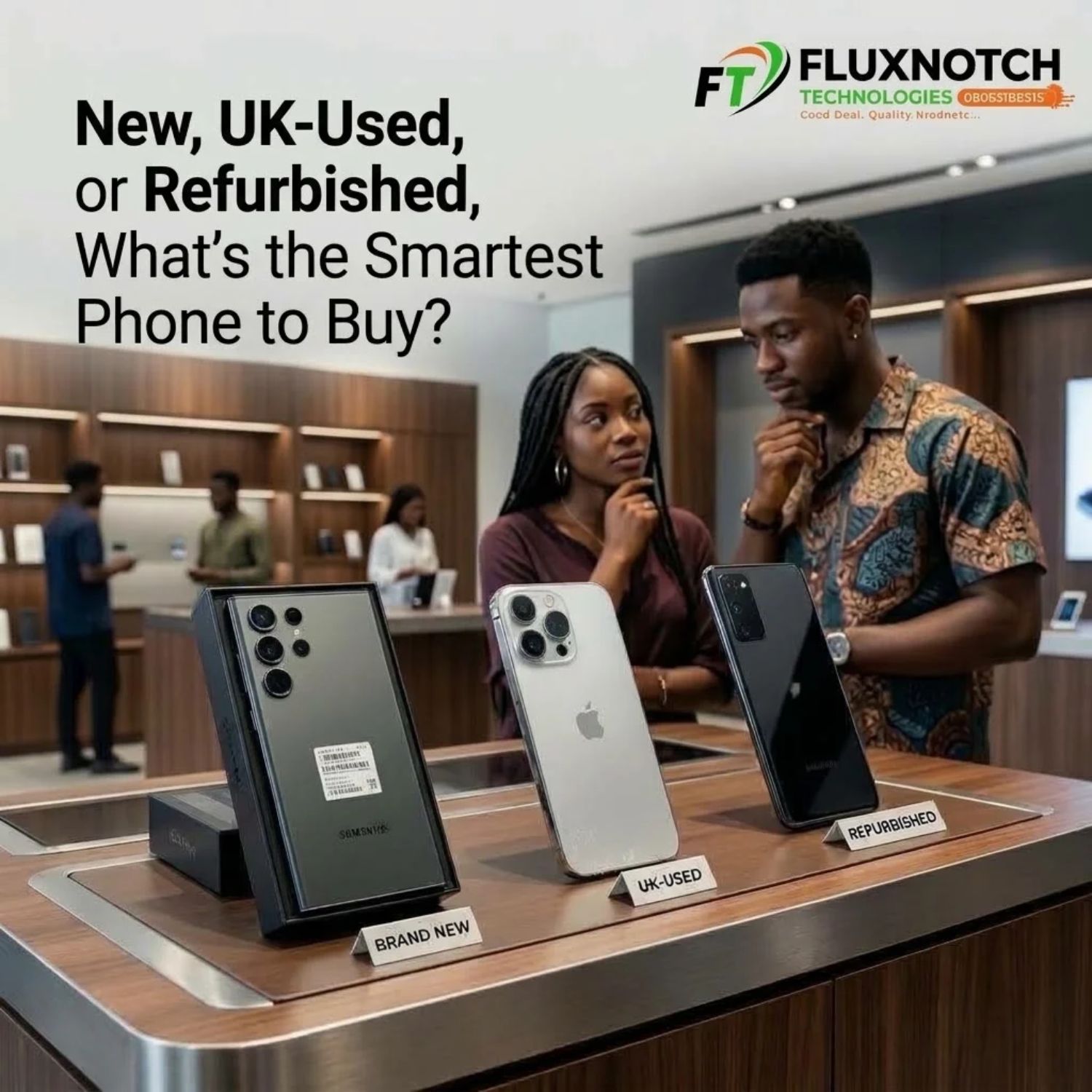
New, UK-Used, or Refurbished: What’s the Smartest Phone to Buy? Leave a comment
Introduction
Buying a smartphone in Nigeria is no longer just about choosing between an iPhone and a Samsung, or deciding whether you want a good camera, a bigger battery, or more storage. Your budget matters, too. You might find a brand-new phone at one price, a UK-used version of the same model for considerably less, and another advertised as refurbished or open box. At first glance, they might look almost identical. So, what explains the difference, and which one deserves your money?
This is where many buyers get confused. A phone can look clean and still have a weak battery. Another might have a few scratches but work perfectly. Some refurbished phones have undergone proper repairs and testing, while others may have received only basic checks. And an open-box phone is not automatically brand new simply because it comes with its original packaging.
Before you buy your next smartphone, it helps to understand what these labels mean, what they tell you about the phone’s history, and what they do not guarantee. Let’s break it down so you can make a more informed decision.

1. Buying a New Phone: Is the Extra Cost Worth It?
A new smartphone should be unused and sold in its original condition. Depending on the brand and seller, it should come with its original packaging, included accessories, and applicable warranty. You would generally expect an unused battery, no signs of physical wear, and no previous owner’s accounts or personal data on the device.
For many Nigerian buyers, buying new offers a degree of certainty. You are less likely to inherit wear from another person’s usage, and you may receive better warranty support, depending on the manufacturer and where the phone was purchased. This can be especially valuable if you rely on your phone for business, content creation, online banking, work, or everyday communication.
However, a new phone usually costs more than an equivalent pre-owned model. Before paying the premium, check whether the warranty is valid locally or internationally, confirm the exact storage configuration, and make sure the phone is compatible with Nigerian mobile networks. Do not rely on a sealed box alone as proof of authenticity or warranty eligibility.
2. UK-Used Phones: A More Affordable Route to a Better Phone?
UK-used phones are devices that were previously owned or used in the United Kingdom before being imported into Nigeria for resale. They are popular among buyers who want access to premium smartphones without paying the full price of a new unit. For example, a previous-generation iPhone or Samsung flagship may offer an excellent camera, a high-quality display, and strong performance at a more accessible price.
But here is the catch: UK-used describes a phone’s previous market or ownership history, not its guaranteed condition. One device may have been carefully maintained, while another may have been used heavily every day. A phone can have a clean body and still have a degraded battery, a replaced display, a faulty charging port, or a camera that no longer performs as expected.
Before buying a UK-used phone, inspect it thoroughly. Check battery health where available, test the cameras and speakers, make a call, connect to Wi-Fi, test mobile data, and confirm that Face ID, Touch ID, or fingerprint recognition works where applicable. Inspect the display for dead pixels, discolouration, and touch issues. Also check that the phone is not locked to another person’s Apple or Google account and that its IMEI is consistent with its records.
A UK-used phone can be a smart purchase when its condition is accurately represented and its price reflects any wear. The important thing is to judge the individual device, not assume that every imported phone is a bargain.
3. Refurbished Phones: What Has Actually Been Repaired?
A refurbished phone is generally a previously owned or returned device that has undergone some form of inspection, testing, repair, or restoration before being sold again. The process varies from seller to seller. One phone might have received a replacement battery or screen, while another may simply have been cleaned and tested to confirm that its basic functions work.
This distinction matters because refurbished does not automatically mean manufacturer-refurbished, nor does it guarantee that every component is original. A phone refurbished by the manufacturer under an established programme may come with defined quality checks and warranty terms. A phone refurbished by an independent technician may also be worth buying, but you need to know what work was done and what support comes with it.
Ask whether the screen, battery, charging port, or other components have been replaced. Find out whether replacement parts are original or third-party, whether the phone has been tested for water damage, and whether the seller provides a written warranty or return policy. If the phone has been repaired, request a clear explanation of the repair history rather than relying on the word “refurbished” alone.
A properly refurbished phone can offer a useful balance between price and functionality. However, the quality of the refurbishment, the transparency of the seller, and the warranty terms matter far more than the label itself.
4. Open-Box Phones: Almost New or Previously Used?
An open-box phone is one whose original packaging has been opened. It may have been removed for inspection, displayed in a store, returned by a customer, or used briefly before being resold. Some open-box phones have seen very little use, but others may have been activated or handled more extensively.
The key point is that open box describes the packaging or sales history, not a guaranteed condition grade. The phone may be in excellent condition, but you should not automatically assume that it is unused, that every accessory is included, or that its original warranty is still fully available.
Before buying, ask why the box was opened and whether the phone was ever activated or used. Check for scratches, screen marks, signs of repair, and missing accessories. Inspect the charging cable and other included items, and confirm the phone’s activation and warranty status where the manufacturer provides a verification service. For iPhones, check that Activation Lock is disabled and the device can be set up with your own Apple Account. For Android phones, make sure the previous owner’s account has been removed and that the device can be activated normally.
An open-box phone can be worth considering if it is in excellent condition and priced meaningfully below a comparable new unit. If the discount is small, buying new may offer better value through clearer warranty coverage and fewer uncertainties.
5. The Phone May Look Perfect, but What About the Battery?
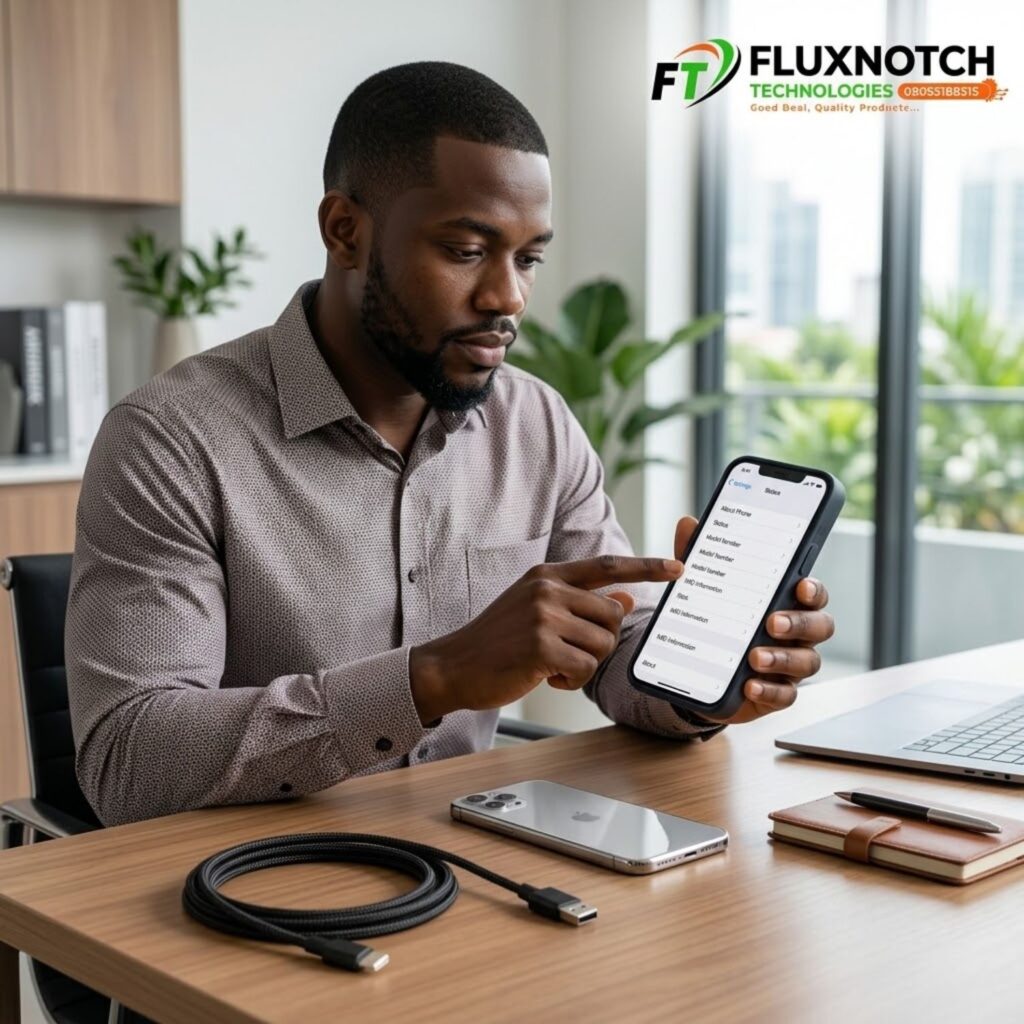
One of the most important things to check when buying a pre-owned or refurbished phone is its battery. A device may look almost new, run smoothly, and take beautiful pictures, but a worn battery can make everyday use frustrating. You might find yourself charging several times a day, carrying a power bank everywhere, or watching the battery percentage drop faster than expected.
For an iPhone, check Battery Health in the settings if that feature is available. For Android phones, battery-health information varies by manufacturer and model, so you may need to use the phone’s built-in diagnostics or an appropriate service tool. Remember that battery-health readings are useful indicators, not a complete guarantee of future performance. Test the phone under normal use and watch for unusual heating, unexpected shutdowns, or rapid battery drain.
Also inspect the charging port and test charging with a compatible cable and adapter. If the phone supports fast charging, confirm that it works as expected. Ask whether the battery has been replaced and, if so, whether the replacement part is original or third-party. A replacement battery is not automatically a problem, but you should know about it before paying.
In Nigeria, where you may depend on your phone for transfers, navigation, communication, and work throughout the day, battery reliability can be just as important as camera quality or storage. A slightly cheaper phone that needs an immediate battery replacement may not be the bargain it first appears to be.
6. How to Check a Used or Refurbished Phone Before Paying
Never buy a pre-owned phone based only on its appearance or a short demonstration. Start by confirming the exact model and storage capacity. A phone advertised with more storage than it actually has is not a good deal, no matter how attractive the price looks. Check the device information in its settings and compare it with the seller’s description.
Next, test the essentials. Make a call, test the microphone and earpiece, play audio through the speakers, open both front and rear cameras, record a short video, connect to Wi-Fi, and test mobile data. Check the screen for discolouration and dead pixels, and make sure the entire touchscreen responds correctly. Test the buttons, charging port, fingerprint reader, and face-recognition features where applicable.
You should also confirm that the phone is not network-restricted or tied to someone else’s account. Check the IMEI and any available warranty information, and ask about the phone’s repair history. Water resistance deserves special caution: even a phone originally designed to resist water may have lost that protection after wear or repair, so do not assume it is still waterproof simply because the model was advertised that way.
Finally, request a receipt and written details of the warranty or return policy. If the seller will not allow reasonable testing, cannot explain the phone’s condition, or pressures you to pay immediately, reconsider the purchase. A genuine deal should withstand sensible questions.
7. So, Which Type of Phone Should You Buy?
The right choice depends on your priorities, how much you can comfortably spend, and how you use your phone. If you want a device with no previous ownership and the clearest route to applicable manufacturer support, a new phone may be your best option. If you want a premium model at a lower price, a carefully inspected UK-used phone could make sense. A properly refurbished phone may offer a balance between affordability and tested functionality, while an open-box phone can be attractive when its condition is excellent and the discount is worthwhile.
Think beyond the purchase price. Consider battery condition, storage, software support, repair costs, warranty coverage, and how long you expect to keep the phone. An older flagship may have a better camera than a new budget phone, but it may also have fewer years of software updates remaining. A phone with a large storage capacity may be more practical if you record lots of videos, while a reliable battery may matter more if you spend long hours away from a charging point.
There is no single category that is always best. A well-maintained UK-used phone can outperform a poorly maintained refurbished one in condition, while an open-box device may be less attractive than a new phone if the price difference is negligible. Compare the actual device, not just the sales label.
Conclusion: Buy the Phone That Makes Sense, Not Just the One That Looks Like a Deal
New, UK-used, refurbished, and open-box phones can all offer value, but they come with different expectations and possible trade-offs. The mistake is assuming that a phone is reliable because it looks clean, affordable because it is used, or nearly new because its packaging has been opened.
Before paying, check the battery, screen, cameras, charging, network connectivity, account status, storage, warranty, and repair history where available. Compare the final price against the phone’s condition and expected lifespan. Most importantly, make sure the phone can do what you need it to do without forcing you into avoidable repair costs.
At FluxNotch Technologies, we help Nigerian buyers make informed technology decisions. Whether you are looking for a smartphone for everyday communication, business, photography, content creation, or entertainment, take the time to understand what you are buying.
The best deal isn’t simply the lowest-priced phone. It is the phone that gives you the right value for your money.
