
Tips for Buying the Complete Smartphone Experience, Not Just the Camera. Leave a comment
Introduction
Imagine walking into a phone store with one thing in mind: buying a smartphone with an excellent camera. You have seen the pictures online, admired the portrait shots and watched videos recorded with the device. Perhaps a content creator you follow has been using it, or someone you know recently purchased one and cannot stop talking about its camera quality. The specifications look impressive, the design catches your attention, and you are already imagining the pictures and videos you could create with it. It seems like an easy decision. But is it really?
Here is something many smartphone buyers discover only after making a purchase: an impressive camera does not automatically translate into an impressive smartphone. You could have a device that takes beautiful pictures but struggles when you open multiple applications. Its battery might not last through your daily activities, its storage could fill up faster than expected, or its display might not provide the comfortable viewing experience you need. These are not minor inconveniences when you depend on your phone every day. They can gradually turn what initially felt like an exciting purchase into a frustrating experience.
Think about how much you actually ask your smartphone to do. You use it to communicate with customers, attend online classes, manage your social media accounts, make payments, watch videos, take photographs, work and stay connected. For some Nigerians, it is practically a portable office. For others, it is their primary device for creating content or running an online business. This means choosing a smartphone should involve more than comparing camera specifications or following the latest trends.
Welcome to the FluxNotch Technologies blog. In this article, we are looking beyond the camera to examine the features that contribute to a complete smartphone experience. Whether you are replacing an old device, buying your first smartphone or considering an upgrade, understanding these details can help you spend your money more wisely. After all, the goal is not simply to buy a phone that impresses you when you first unbox it. It is to choose one that continues to serve you well long after that excitement has passed.
The Camera Looks Impressive. But What Happens After You Take the Picture?

There is a reason smartphone manufacturers give their cameras so much attention. Beautiful photographs, impressive portrait effects and high-quality videos are easy to showcase. A single photograph can make a device look considerably more attractive, especially when you are comparing several smartphones. However, camera quality is not determined by megapixels alone. Sensor size, lens quality, image processing, autofocus and optical image stabilisation all influence the final result. This explains why two smartphones with similar megapixel counts can produce noticeably different photographs.
Consider someone who regularly takes pictures at family celebrations, records videos for social media or photographs products for an online business. They need more than a camera that performs well in bright daylight. They may also need reliable autofocus, good low-light performance, stable video recording and consistent image processing. Features such as optical zoom and ultrawide photography can also make a difference, depending on what they photograph. The important thing is to understand which camera capabilities genuinely matter to your activities instead of assuming that a bigger megapixel number guarantees better results.
There is also a bigger question worth asking: how much of your smartphone usage actually involves taking pictures? You might spend a few minutes photographing an event but several hours responding to messages, browsing, watching videos and handling other tasks. That does not make camera quality unimportant. It simply means it should be considered alongside the other features that determine how enjoyable the device will be to use.
A Fast Camera Means Little If the Rest of Your Phone Cannot Keep Up
Imagine taking a beautiful picture and immediately wanting to edit it, share it on social media, or send it to a customer. But as you switch between applications, your smartphone begins to slow down. An application takes longer to open, the screen freezes occasionally, or multitasking becomes frustrating. Suddenly, the camera that attracted you to the device does not feel like such a big advantage.
This is where the processor and RAM become important. The processor handles the instructions and calculations that allow your applications and operating system to function, while RAM provides temporary working space for the tasks and applications your phone is handling. Having enough RAM can make multitasking more comfortable, but more RAM does not automatically guarantee better performance. Software optimisation, storage technology and the demands of the applications you use also matter. A smartphone should be evaluated as a complete system rather than by looking at one impressive specification.
Your everyday activities should guide how much performance you need. Someone who mainly makes calls, browses, streams videos and uses messaging applications may not require the same processing power as someone who edits videos, plays demanding games or manages several business applications. The objective is to choose a device that can handle your workload comfortably without paying extra for performance you are unlikely to use. Explore the smartphone options at FluxNotch and pay attention to the processor, memory and overall configuration that match your daily activities.
The Battery and Storage Problems That Can Ruin an Otherwise Good Smartphone
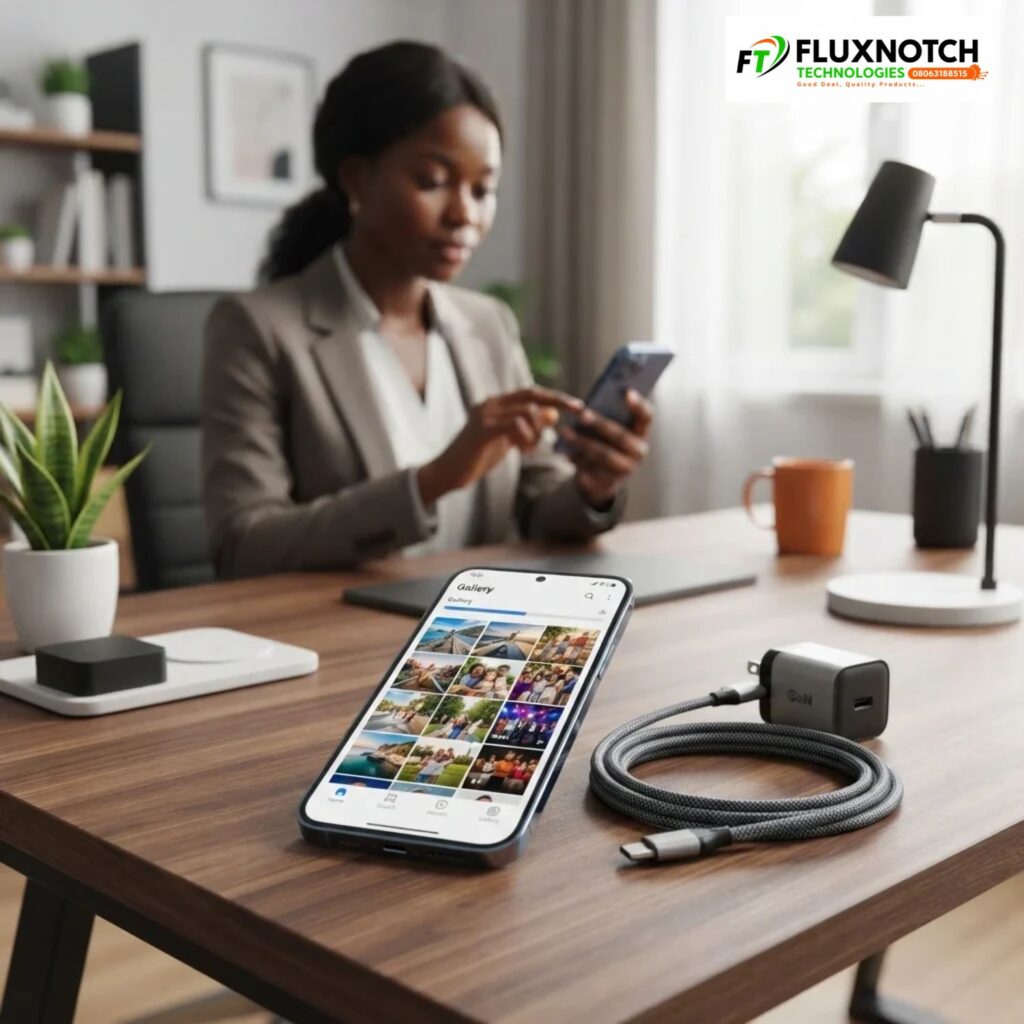
Recording videos at an event, taking pictures with friends or documenting products for your business. Everything is going smoothly until your phone displays a low-battery warning. Alternatively, you attempt to save another video and discover that your storage is almost full. These situations can be particularly frustrating when you have invested a significant amount in your smartphone. They also demonstrate why battery life and storage deserve as much attention as camera quality.
Battery capacity, usually expressed in milliampere-hours (mAh), is useful when comparing devices, but it does not tell you exactly how long a phone will last. Battery endurance also depends on the processor, display, screen brightness, network conditions, software optimisation and applications running in the background. Someone who spends hours recording videos, gaming or using mobile data may experience different battery life from someone who mainly sends messages and makes occasional calls. Charging speed matters too, especially if you frequently need to recharge between activities. However, you should check the phone’s supported charging standard and compatible charger rather than assuming every fast charger will deliver the advertised speed.
Storage creates a different kind of problem. Your smartphone gradually accumulates photographs, videos, documents, applications, downloaded files and other media. A device that seemed to have enough space when you purchased it may become inconvenient after months of regular use. For many everyday users, 128GB may be sufficient, particularly if they manage their files and use cloud storage. However, people who record lots of videos, download large applications or maintain extensive media libraries may benefit from 256GB or more. You should also check whether the particular model supports expandable storage, because not every smartphone offers a memory card slot. Before choosing your next device, compare the battery and storage configurations available atFluxNotch against the demands of your daily routine.
CLICK HERE TO SHOP OUR WIDE RANGE OF SMARTPHONES TODAY
You Will Look at Your Display More Often Than You Think
Think about how often you interact with your smartphone screen. You use it to read messages, watch videos, browse websites, view photographs, attend meetings, play games and manage applications. In fact, the display influences almost every interaction you have with your device. Yet, it is easy to overlook screen quality when smartphone advertisements focus heavily on cameras and photography.
Display technology is one of the first things worth understanding. AMOLED displays can produce deep blacks because individual pixels can switch off when displaying black content. They often offer strong contrast and vibrant colours. LCD displays use a backlight and can still provide a good viewing experience, depending on their quality and implementation. Screen brightness also matters, particularly when using your phone outdoors. A display that looks clear indoors may become difficult to read under bright sunlight if its brightness is insufficient. Resolution affects how sharp text, images and videos appear, although the benefit of higher resolutions depends on screen size and viewing distance.
Then there is refresh rate. A display with a higher refresh rate, such as 90Hz or 120Hz, can make scrolling and supported animations appear smoother than a conventional 60Hz screen. However, refresh rate should not automatically outweigh other display considerations. Screen size, weight, thickness, button placement and speaker quality all influence everyday comfort too. A large screen may be excellent for watching videos and reading documents, but less convenient for someone who prefers using their phone with one hand. When comparing smartphones, consider the complete viewing and handling experience, not just the display specification printed on the box.
The Best Smartphone for a Content Creator May Be the Wrong Choice for a Student

One of the biggest mistakes people make when buying smartphones is assuming that the most expensive device or the one receiving the most attention online must be the best choice. That is not necessarily true. Your ideal smartphone depends on what you need it to do, how frequently you use certain features and how much you are comfortable spending. A phone that works perfectly for someone else may not provide the same value for you.
For a content creator, camera quality may be a major priority, but video stabilisation, processing power, storage capacity and battery endurance are equally important. A student may place greater importance on affordability, battery life, sufficient storage and smooth everyday performance for online classes, research and communication. Business owners may need dependable performance for customer communication, mobile banking and order management, while also considering software security and update support. Digital marketers and other professionals who work on the move may need a balanced combination of multitasking capabilities, camera quality, connectivity and storage.
Even everyday users who mainly communicate, browse, stream videos and take occasional photographs have their own priorities. They may benefit more from a dependable battery, comfortable display and sufficient storage than from advanced camera features they rarely use. This is why you should avoid choosing a smartphone simply because someone else recommends it. The smartest purchase is not necessarily the most expensive one. It is the device that gives you the features and performance you genuinely need without making you pay for capabilities you will hardly use.
Before You Spend Your Money, Give the Entire Smartphone a Closer Look
By now, you should have a clearer understanding of why a smartphone’s overall experience matters. But how do you put that knowledge into practice when you are ready to purchase? Start by identifying what you use your current phone for and what you would like your next device to improve. If your present smartphone struggles with storage, for example, buying another phone with a similar storage capacity may simply recreate the same problem. Your next purchase should address your actual needs, not just introduce a new camera or design.
Next, compare the specifications of the models within your budget. Look at the processor, RAM, storage, battery capacity, charging support, display characteristics and camera capabilities. Consider the software update commitments and security support, since these can influence how long you can comfortably continue using the device. If you depend heavily on mobile data, check that the particular model supports the network bands and connectivity features relevant to your mobile network and location. It is also worth checking the exact model variant, because smartphones with similar names can have different processors, memory configurations and features depending on their market.
Finally, consider the complete value of the purchase. A lower-priced smartphone may offer everything you need, while a more expensive device may provide additional capabilities that are genuinely useful for your work or lifestyle. The important thing is to understand what you are paying for and whether those extra features justify the difference. Do not rush into a purchase because of an attractive promotional image or an impressive camera specification. Take time to compare the options and choose a device that makes sense for your budget and everyday activities. When you are ready, explore the smartphone collection at FluxNotch Technologies and consider which available option delivers the experience you actually need.

Conclusion: Your Next Smartphone Should Do More Than Take Great Pictures
A smartphone with an impressive camera can certainly be worth buying, but that should not be the only reason you choose it. Your device needs to support the different ways you communicate, work, create content, learn, relax and manage everyday activities. A beautiful photograph may impress you when you first unbox your phone, but battery endurance, storage capacity, processing performance, display quality and everyday comfort will continue to influence your experience long after that moment.
Before making your next purchase, think beyond the specifications that attract the most attention. Consider your lifestyle, understand your priorities and compare devices based on the complete experience they offer. At FluxNotch Technologies, we want buyers to make informed technology decisions by looking beyond attractive specifications and considering what they genuinely need. Explore our smartphone collection, compare your options and make your next purchase with a clearer understanding of what matters.
Because the right smartphone should do more than take great pictures. It should make everyday life easier.
