
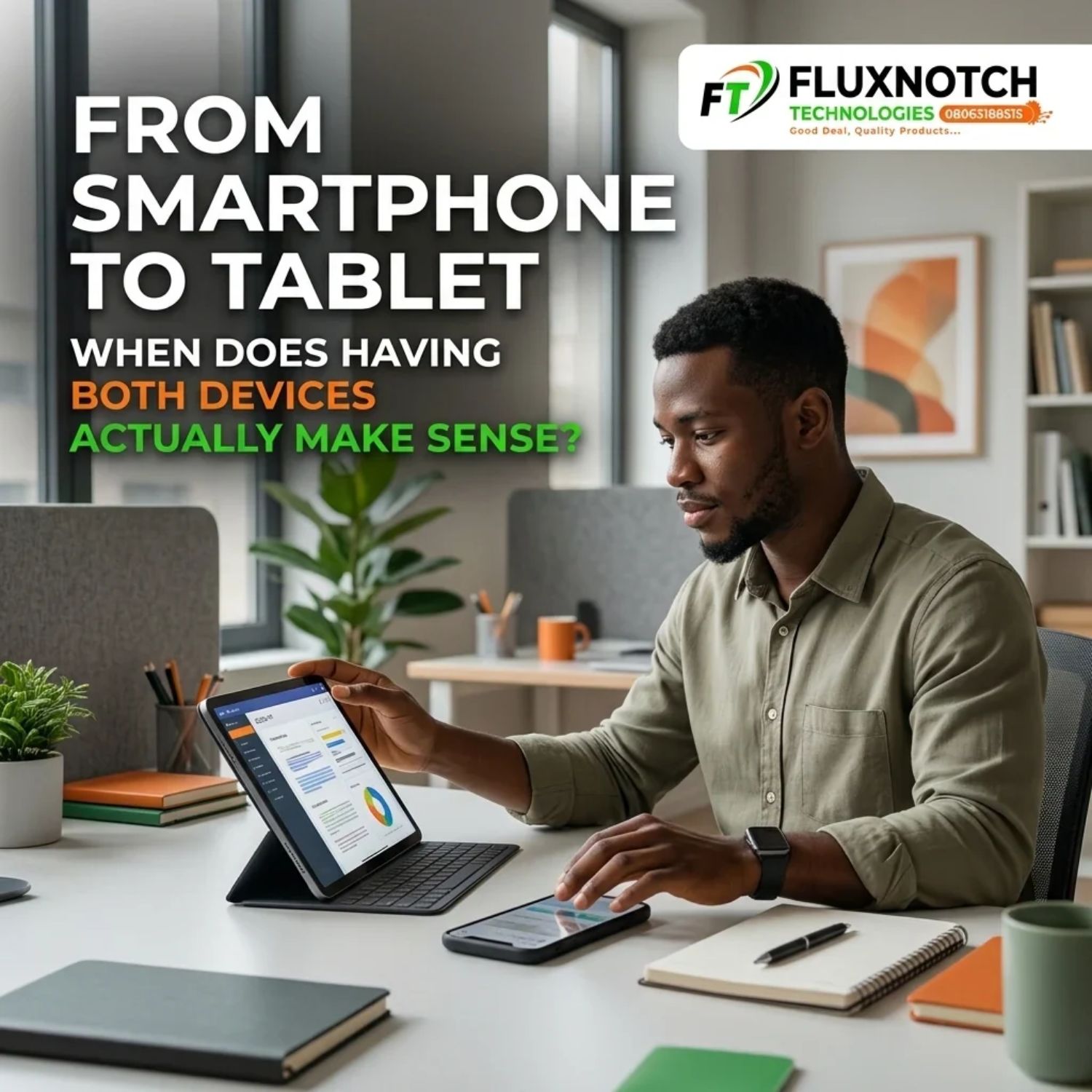
From Smartphone to Tablet: When Does Having Both Devices Actually Make Sense? Leave a comment
Introduction
Your smartphone probably does more than you initially expected. You use it to make calls, reply to WhatsApp messages, attend online meetings, read documents, watch tutorials, manage social media and perhaps even run parts of your business. For many Nigerians, it has become the one device that keeps several aspects of daily life moving.
But sometimes, you notice its limitations. Reading a lengthy PDF becomes uncomfortable, switching between applications feels restrictive, and working on a document requires more patience than it should. You start wondering whether a tablet would make things easier. Then another question comes up: is buying a second device really worth the money?
The truth is that smartphones and tablets serve many of the same purposes, but they do not always deliver the same experience. While one offers convenience and portability, the other can provide more room for work, entertainment and productivity. However, owning both does not automatically mean you will become more productive.
So, when does having a smartphone and tablet actually make sense? And how do you know whether a tablet is something you genuinely need or just another expense? Welcome to the FluxNotch Technologies blog. Let’s explore what you should consider before making that decision.
Your Smartphone Can Do Almost Everything, but Is It Comfortable for Everything?

Modern smartphones have become incredibly capable. You can edit documents, manage business accounts, attend virtual meetings, create content and even handle tasks that once required a computer. However, being able to perform a task does not always mean your smartphone is the most comfortable device for it.
Think about someone who spends several hours reading lecture materials, reviewing business documents or managing multiple social media accounts. A smartphone might handle all these activities, but the smaller display can make prolonged use uncomfortable. You may find yourself constantly zooming into documents, switching between applications or scrolling through information that would be easier to view on a larger screen.
This becomes particularly noticeable when your daily activities involve more than quick communication and browsing. A student working through lengthy study materials, for example, may find that reading and taking notes on a smartphone requires more effort. Similarly, a business owner reviewing spreadsheets or presentations may prefer a device that provides more screen space.
That does not mean your smartphone is inadequate. It simply means that different activities have different requirements. Your phone remains useful for quick tasks, communication and activities on the move. However, when you regularly work with documents, detailed information or multiple applications, a larger display can make a noticeable difference.
If your smartphone is becoming uncomfortable for extended work or studying, explore the smartphones and tablets available at FluxNotch Technologies to find a device that better suits your daily activities.
What Does a Tablet Actually Give You That Your Smartphone Doesn’t?
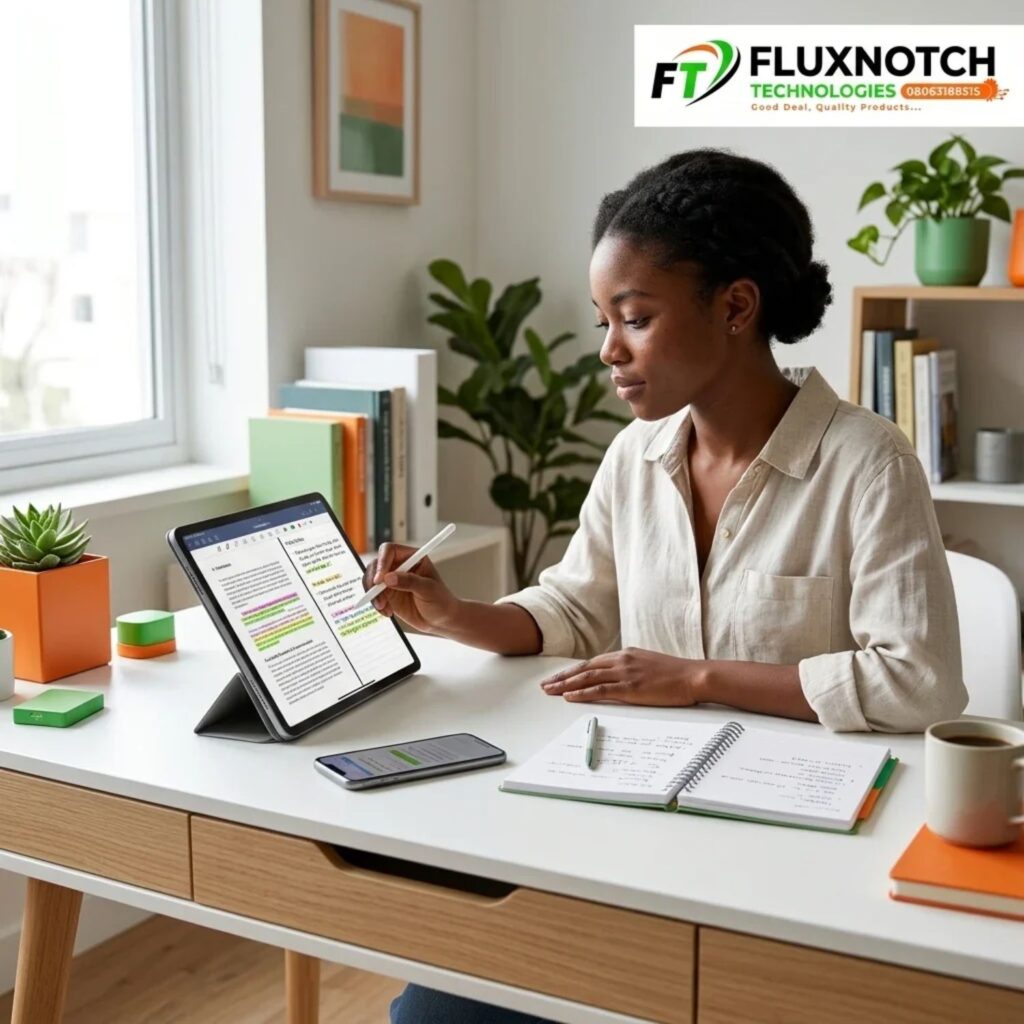
The most obvious difference between a smartphone and a tablet is screen size, but the benefits go beyond having a larger display. A tablet can change how comfortably you interact with information, applications and digital content.
For instance, imagine watching an online tutorial while following instructions in a separate document. On a smartphone, you may need to switch between applications repeatedly or use a split-screen feature that leaves limited room for both. On a suitable tablet, the larger display can make viewing documents, following lessons and using compatible multitasking features more comfortable.
Tablets can also be useful for digital note-taking. Models that support compatible styluses allow users to write notes, highlight important information, annotate PDFs and organise study materials without carrying several physical notebooks. For professionals, a tablet can make reviewing presentations, reading reports and sharing information during meetings more convenient.
Entertainment is another area where the difference becomes noticeable. Watching films, reading digital books, following cooking tutorials or browsing content can be more enjoyable on a larger screen, particularly when you spend extended periods doing these activities.
However, it is important to understand that a tablet is not automatically more powerful than a smartphone. Some high-performance smartphones can outperform entry-level tablets. The real advantage often comes from the larger display, compatible accessories and the experience the device provides.
In other words, a tablet should not be viewed as a bigger smartphone. It should be considered a device that makes certain activities easier to manage.
If a larger screen would improve how you study, work or enjoy digital content, explore the tablet options at FluxNotch Technologies and compare the features that matter to your needs.
Who Actually Benefits From Owning Both a Smartphone and a Tablet?
Not everyone needs two mobile devices, but some people can genuinely benefit from having both. The difference usually comes down to how frequently they perform tasks that require different screen sizes and levels of convenience.
Consider a university student who uses a smartphone for calls, messaging, mobile banking and quick research. However, their academic responsibilities also involve reading lengthy PDFs, attending online lectures, reviewing presentations and taking notes. A tablet could make these activities more comfortable, allowing the smartphone to handle everyday communication while the tablet supports learning.
Business owners can benefit in a similar way. A smartphone makes it easy to respond to customers, communicate with suppliers, receive notifications and manage quick business updates. A tablet, on the other hand, can provide a more convenient way to review documents, present products, display catalogues and manage certain business applications. For someone who regularly meets clients, that larger display can be particularly useful.
Digital professionals and freelancers may also find value in owning both devices. A digital marketer, for example, might use a smartphone to monitor social media accounts, respond to messages and capture content, while using a tablet to review creative materials, read briefs, plan campaigns and organise work. Designers and content creators may appreciate the larger display for reviewing visuals, although demanding professional editing may still require a capable laptop or desktop.
Even frequent travellers can benefit from the combination. A smartphone handles navigation, communication, bookings and quick updates, while a tablet provides a more comfortable screen for reading, entertainment and certain work activities during journeys.
The important thing is that both devices should have clearly defined roles. If your tablet spends most of its time sitting beside your smartphone without being used, you may not be getting much value from the additional purchase.
When Buying a Tablet Is Actually a Waste of Money
This is a question worth considering before spending money on another device. Sometimes, the smartest technology decision is not buying anything at all.
If your smartphone already handles your everyday activities comfortably, you may not need a tablet. Someone who mainly uses their device for calls, WhatsApp, social media, occasional browsing and watching short videos might struggle to justify the additional expense. A tablet could offer a larger viewing experience, but that does not necessarily mean it will improve their daily routine enough to warrant the purchase.
The situation becomes even more important when working with a limited budget. With the cost of technology placing pressure on many Nigerian households and businesses, purchasing a second device should involve careful consideration. You do not want to spend money on a tablet simply because it looks useful, only to discover that your existing smartphone already does everything you need.
There is also the question of whether a tablet is the right solution for your workload. If your primary reason for wanting one is to perform advanced spreadsheet work, software development, complex graphic design or demanding professional editing, a laptop or desktop may be a more suitable investment. Tablets can support certain professional applications, but their capabilities depend on the operating system, software and hardware specifications.
Before purchasing one, ask yourself a simple question: Can I identify at least three regular activities that a tablet would make easier or more comfortable?
If you struggle to answer, it may be worth postponing the purchase. You could use that money to improve your existing smartphone, purchase a necessary accessory or save towards a device that better matches your actual requirements.
Technology should solve problems, not create new financial responsibilities.
Before spending money on another device, compare your actual needs with the smartphones and tablets available at FluxNotch Technologies so you can make a purchase that delivers genuine value.
What Should You Consider Before Choosing a Tablet to Complement Your Smartphone?

Once you have established that a tablet would be useful, the next challenge is choosing one that complements your smartphone. Not every tablet offers the same experience, and buying based on appearance or price alone can lead to disappointment.
Start with the display. Screen size matters because it influences how comfortably you can read, study, watch videos and work with documents. If you intend to use the tablet mainly for reading and entertainment, a suitable display size and good viewing quality should be priorities. However, someone who plans to use it for multitasking or presentations may prefer a larger screen.
Next, consider RAM and storage. RAM influences how well a device handles running applications and switching between tasks, while storage determines how much space you have for applications, documents, downloaded videos and other files. If you expect to use several applications regularly, avoid choosing a tablet with specifications that are too limited for your workload. Also, check whether the device supports expandable storage if you anticipate needing more space.
Battery life deserves attention as well. A tablet may have an impressive display and useful features, but those benefits become less convenient if you constantly need to recharge it. Consider how long you expect to use the device each day and whether its battery capacity suits your routine.
Connectivity is another important decision. Some tablets offer Wi-Fi connectivity only, while others support cellular networks through a SIM card or compatible mobile data connection. A Wi-Fi-only tablet may be sufficient if you mostly use it at home, school or the office. However, if you regularly work outside these environments, cellular connectivity could offer additional convenience. Remember that cellular support, network compatibility and SIM options vary by model.
Finally, consider the operating system and available accessories. If you already use a particular smartphone ecosystem, choosing a compatible tablet may make file sharing, synchronisation and application access more convenient. You should also check whether the tablet supports a keyboard, stylus or protective case if these accessories are important to your intended use. Not every accessory works with every tablet.
The best tablet is not necessarily the one with the highest specifications. It is the one that provides the right combination of performance, display quality, battery life and features for the activities you intend to perform.
Ready to find a tablet that matches your smartphone and your daily workload? Explore the tablet collection at FluxNotch Technologies and compare the specifications before making your choice.
How to Build a Smartphone-and-Tablet Setup Without Overspending
Owning both devices does not mean you have to purchase them at the same time. In fact, building your setup gradually can be a more sensible approach, particularly if you are working with a specific budget.
Start by identifying which device handles your most important activities. If communication, mobile banking, photography and quick everyday tasks are your priorities, a reliable smartphone should come first. If your main activities involve reading, studying, watching online lessons or working with documents, a tablet may deserve more attention, depending on whether you already have a suitable smartphone.
Once you have the first device, pay attention to the activities that remain inconvenient. Perhaps you frequently struggle to review documents on your phone, or you need a larger screen for online classes and presentations. These are practical reasons to consider adding a tablet.
You should also think about how the two devices will work together. Cloud storage services can help you access documents across compatible devices, while synchronised calendars, notes and productivity applications can keep important information organised. Some devices also support convenient file-sharing features, although the available options depend on their operating systems and software compatibility.
Accessories can improve the experience, too. A compatible keyboard may make typing on a tablet more comfortable, while a suitable stylus can support handwriting and document annotation. A protective case can also help protect the device during everyday use. However, these accessories add to the overall cost, so include them in your budget rather than treating them as unexpected expenses.
Most importantly, avoid buying specifications simply because they sound impressive. A tablet intended for reading, browsing and online classes may not require the same hardware as one used for demanding creative applications. Understanding the difference can help you avoid paying for features you are unlikely to use.
A good device setup is not measured by how many gadgets you own. It is measured by how effectively those devices support your everyday activities without putting unnecessary pressure on your finances.
If you are planning to expand your technology setup, browse the smartphone, tablet and mobile accessories available at FluxNotch Technologies to build a combination that fits your needs and budget.
Conclusion: You Don’t Need More Devices. You Need the Right Combination.
Having both a smartphone and a tablet can make a meaningful difference, but only when each device serves a purpose. Your smartphone provides the convenience you need for communication, quick tasks and everyday activities, while a tablet can offer a more comfortable experience for studying, reading, entertainment, presentations and certain productivity tasks.
For students, business owners, digital professionals and content creators, owning both may be a worthwhile investment. However, if your smartphone already meets your needs, purchasing a tablet simply because you want another device may not be the best financial decision.
Before making a purchase, consider your daily activities, the limitations you currently experience and the improvements you expect from a second device. Pay attention to specifications, compatibility, accessories and your budget. These considerations will help you choose technology that genuinely supports your lifestyle.
At FluxNotch Technologies, we understand that choosing the right device is about more than owning the latest technology. It is about finding products that deliver practical value. Explore our range of smartphones and tablets to discover options that fit your everyday needs.
